
How Scout's Honor Added 20% to Revenue Year After Year and Grew to Nearly 50 Employees
"We literally do not have any more room."
That was Allison Jacobs giving me the latest update from Scout's Honor back in July.
Nearly 50 employees.
A training service doing FAR better than she expected.
Grooming ready for another leap.
Demand bursting at the seams.
And a building that is now, rather inconveniently, refusing to grow extra walls.
Not a bad collection of problems for a business owner who once admitted she couldn't wrap her head around how quickly the company was growing.
But let's not jump straight to the shiny bit.
Growth stories have a habit of looking very tidy once somebody turns them into a graph.
Up. Up. Up.
The lived experience is usually less Forbes cover shoot and more standing in the middle of a Tuesday wondering why success has created seventeen new problems before lunch.
And THAT is where Allison's story really starts.
She and her business partner, Kristen Perrus, had built something special at Scout's Honor. Clients wanted it. The community noticed it. The business was moving. FAST.
The problem was that Allison was still looking at the company like the person responsible for managing today.
She needed to become the person responsible for building tomorrow.
That change helped Scout's Honor add 20% to its top-line revenue every year Allison worked with me, raise prices by 40% in one year with only around two clients pushing back, and grow to a team of nearly 50.
Here's how it happened.

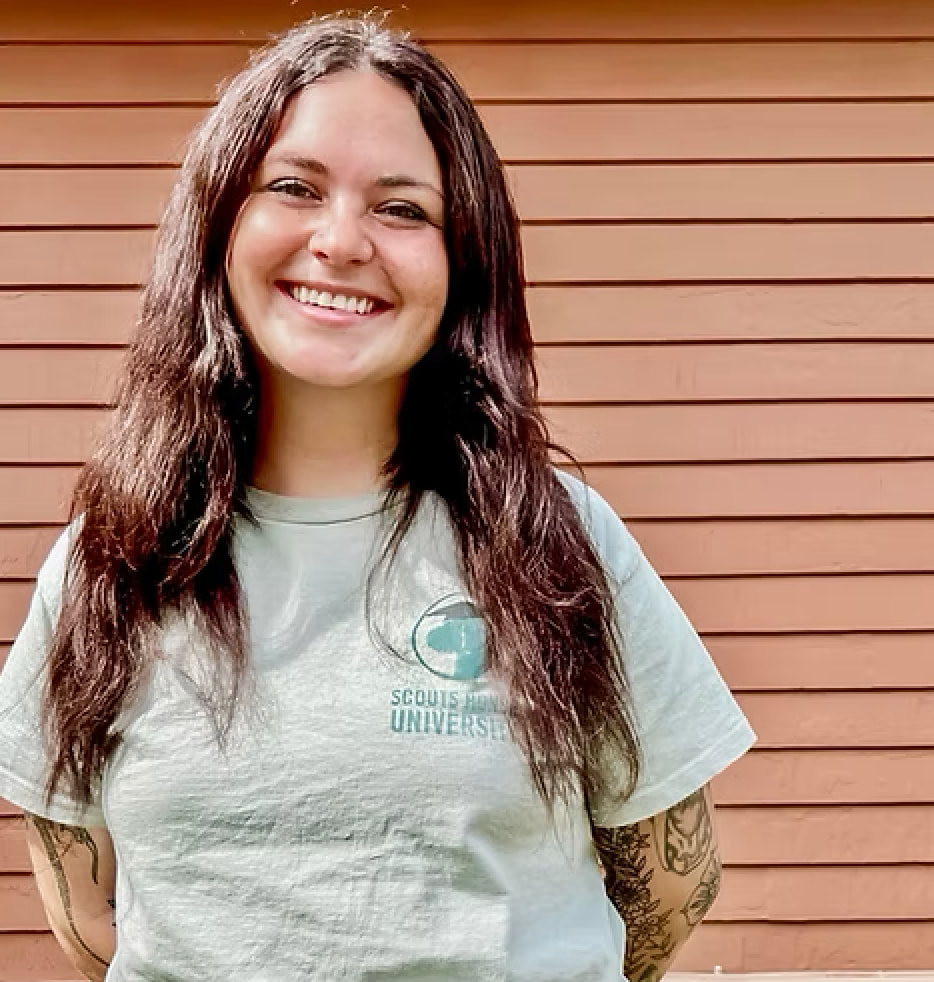
Allison Jacobs (left) and Kristen Perrus (right), co-founders of Scout's Honor Pet Retreat.
Two Dogs Got Kicked Out of Daycare and a Business Was Born
Scout's Honor began when Allison's dogs, Scout and June, were kicked out of the daycare Kristen managed.
Kristen explained what the traditional model could look like behind the scenes.
Big groups of dogs.
Very little individual stimulation.
One human trying to supervise the whole circus.
Good people doing their best inside a model that didn't always give them the time, tools or permission to provide better care.
Kristen wanted to introduce enrichment inspired by the way zoos support the animals in their care. Her employer didn't believe the extra expense was worth it.
So in August 2020, after Kristen left that job, she drove to Allison's house to work out what came next.
Between them, they had already fostered, trained and rehomed more than 70 rescue dogs. Allison had also been growing an in-home pet sitting business.
They knew the dogs.
They knew the industry.
And they knew the existing model could be BETTER.
So they built the kind of pet care business they had wanted to see.
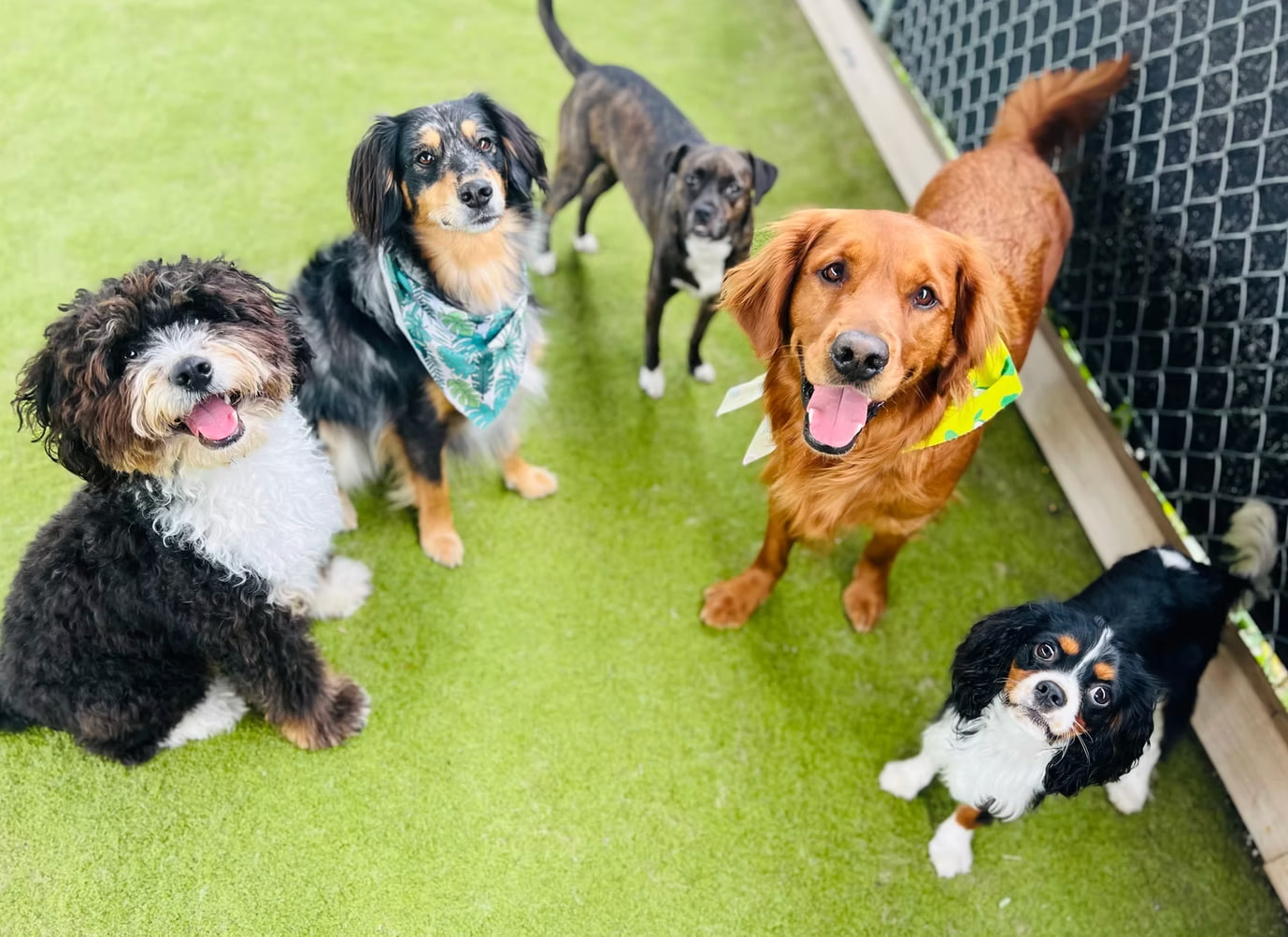
Scout's Honor Pet Retreat grew into a Bloomington facility offering enrichment-based dog daycare, dog boarding, fear-free grooming and positive-reinforcement training.
But they were not interested in opening another dog daycare where the entire product was "your dog will be unconscious by 7 p.m."
They focused on individualised enrichment, fear- and force-free care and properly developing the people responsible for delivering it.
Because Allison and Kristen had spotted another uncomfortable truth about pet care.
The industry was FULL of talented people being told that the privilege of working with dogs made up for poor pay, no benefits and limited career prospects.
So Scout's Honor set out to create actual animal-care CAREERS, not just temporary jobs people loved until real life forced them to leave.
That ambition made the business more complicated to grow.
Scout's Honor built its model around better care for animals AND better careers for the humans caring for them.
The Business Was Growing Faster Than Allison Could Process
When Allison first came to work with me in 2022, lack of demand was not the issue.
Scout's Honor was growing faster than she could wrap her head around.
Now, from the outside, rapid growth sounds marvellous.
Champagne problems and all that.
But inside the business, growth tends to arrive wearing muddy boots and carrying a clipboard full of things you have never dealt with before.
More clients means more staff.
More staff means more managers.
More services means more systems.
More opportunities mean more ways to make the WRONG decision at greater speed.
And when the owner is still thinking like the general manager, every road leads back to their desk.
Allison could see the company was moving to another level.
She just didn't yet know how SHE needed to change to lead it there.
"I was really struggling being a business owner and not a business manager. I didn't know how to take our business to the next level, manage growth or manage opportunities."
There it is.
The business had outgrown the way Allison was used to running it.
And you cannot solve an executive-level problem by becoming a busier general manager.
You can certainly try.
Many do.
Usually at 11:47 p.m. with a cold cup of tea and a mild resentment towards everyone who has ever used the phrase "work-life balance."
Allison Didn't Need to Work HARDER
Allison was already working hard.
Hard was not the missing ingredient. She needed altitude.
She needed to stop staring at each tree, step back and notice somebody had quietly planted an entire bloody forest around her.
So we worked on the bigger picture.
The positioning. The numbers. The people. The opportunities worth pursuing.
And the consequences of today's decisions six or twelve months down the road.
"Dom has taught me how to be the executive that I'm supposed to be, to grow our business in the best and most efficient way possible."
It sounds simple written down. It isn't.
Pet business owners are rewarded for being useful. Answer the message. Cover the shift. Calm the client. Fix the gate. Find the missing lead. Deal with whatever unspeakable thing has just appeared on the daycare floor.
Then the business grows and suddenly the MOST useful thing you can do is stop reacting long enough to think.
Allison also needed somebody willing to challenge her, because surrounding yourself exclusively with people who agree with you is very comforting and occasionally a spectacular way to drive into a ditch.
"Dom has a very different personality than I do, and he pushes me outside of my comfort zone. I need that to be able to grow."
At one point, I told Allison what Scout's Honor needed to raise its prices to.
The business had too much demand for the available capacity. Pricing could bring that under control while giving the company more money to invest in the team, service and next stage of growth.
Allison didn't raise the prices as far as I recommended.
And then the demand problem got worse.
Her verdict afterward?
"I could have been a year ahead of these problems if I had just listened to Dom. So always listen to Dom."
FINALLY.
Only took a year and a supply-and-demand crisis, but we got there.
Joking aside, Allison had run directly into the pricing trap that catches thousands of good pet business owners.
They look at what everyone else charges.
They imagine an angry mob outside reception.
They shave the number down until it feels emotionally survivable.
Then they wonder why the business is full, the team is stretched and the bank account still looks like it has been surviving on meal deals.
Price is not just what the client pays.
It determines what the BUSINESS can afford to become.
Better wages. Proper benefits. Staff development. Quality facilities. Individual attention. Sustainable staffing. Enough profit to solve the next problem without holding a car wash in reception.
Scout's Honor wanted to deliver a premium, enrichment-led service and create proper careers for its team.
Bargain-basement pricing was never going to fund that vision.
Then They Raised Prices by 40%
Eventually, Allison and Kristen made the move.
They raised Scout'sHonor's prices by 40% in one year.
And what happened?
According to Allison, around two people pushed back.
Two.
Despite Scout's Honor being roughly twice the price of some competitors.
All the imaginary complaints. The sleepless nights. The little disaster film playing in your head where every client leaves and tumbleweed rolls through daycare.
NONE of it happened.
The clients who understood the value stayed.
And Kristen, who a few years earlier would have been nervous about increasing prices, now finds herself at industry events telling OTHER owners to raise theirs.
That is the result people miss.
Yes, the number changed.
But their BELIEF about the business changed first.
They stopped asking, "How close should we stay to the competitors?"
They started asking, "What does it cost to deliver THIS standard of care properly?"
Very different question.
Very different business.
Every Solved Problem Created a Bigger, Better One
Since Allison began working with me in 2022, she says Scout's Honor has added 20% to its top-line revenue every single year.
The training service grew beyond what she expected.
Tweaks to the membership programme created more opportunities for grooming.
They needed more trainers. More staff. More space.
Nearly 50 people now work in the business, and the existing building is no longer big enough for where they are going.
Kristen summed up the journey rather neatly:
"I don't think we would be here without you."
And Allison described what kept happening every time they brought a challenge to the table:
"Every problem that we have presented to you, we have fixed to a point where it has caused growth issues."
Which is annoying, isn't it?
You solve the pricing problem and reveal the capacity problem.
You solve the marketing problem and reveal the recruitment problem.
You build the team and realise the building itself has become the problem.
Business is basically a video game where defeating the boss unlocks a BIGGER boss.
But that is not failure.
That is progression.
The goal is not to build a company that never presents another problem. Unless you intend to close it, in which case I can guarantee the problems will become quieter.
The goal is to become the owner who can recognise the next constraint, make a sharper decision and deal with it before it spends another year chewing through your profit.
Scout's Honor has grown into a multi-service pet care business with nearly 50 employees.
The Bit You Cannot Get From Another Generic Conference Talk
Being the person at the top can be LONELY.
You cannot discuss every worry with your managers.
Your business partner may be carrying an entirely different set of responsibilities.
Your family loves you, but there are only so many conversations about labour percentage they can survive before somebody suddenly remembers the bins need putting out.
And once the business moves beyond the basics, large conferences can start repeating information you mastered years ago.
Allison had reached that point.
The same subjects. The same broad advice. The same notes she had already taken.
What she needed was not more INFORMATION.
She needed context.
People who understood the industry.
Owners dealing with comparable revenue, staffing and capacity problems. A room where she could put a real decision on the table and hear from people who had lived some version of it.
Inside the mastermind she belonged to at the time, she found that room.
"Everyone here has similar problems or has had similar problems and can give me advice on what to do."
She was nervous before her first meeting.
Would she belong?
Would everybody else be miles ahead?
Would they all turn slowly in their chairs like a panel of Bond villains and demand her profit-and-loss statement?
No.
She found accomplished owners who were welcoming, generous and willing to share what had actually worked.
Those meetings became a highlight of her working year because she left with more than a notebook full of ideas.
She left ready to make DECISIONS.
What This Means for Your Pet Business
Allison and Kristen's story is impressive.
But admiring it from a safe distance is not terribly useful.
So here is the uncomfortable bit.
If you are full but not profitable, being full is not the win you think it is
Strong demand can hide weak pricing, poor margins and a business held together by the owner's willingness to absorb the pressure.
Full is a capacity measurement.
PROFITABLE is a business model.
Please stop confusing the two.
Your cheapest competitor is not your unpaid finance director
Their prices may be based on entirely different wages, services, standards, overheads or levels of panic.
Copying the number does not make it correct.
It simply means two businesses may now be underpriced instead of one.
The role that built the business may not be the role that grows it
At the beginning, being everywhere is useful.
At the next stage, it becomes a bottleneck.
You cannot lead a fifty-person company while behaving like the emergency contact for every missing mop head.
Better problems are still problems
More demand. A bigger team. Another building.
These are signs of progress, but they still require planning, cash and executive decisions.
Celebrate for five minutes.
Then work the problem.
Outside perspective is not a luxury once your decisions become expensive
One delayed pricing decision cost Scout's Honor a year of getting ahead of its capacity problem.
How much is the decision you are currently avoiding costing YOU?
What If You're Facing Your Own Next-Level Problem?
The problems running through Allison's story are the same ones I help pet business owners tackle today.
Pricing that no longer fits the service.
Demand stretching the team.
An owner trapped in daily management.
Opportunities arriving faster than the business can evaluate them.
Decisions becoming more expensive while the number of people you can properly discuss them with becomes smaller.
Dog Daycare Success Academy was built for ambitious dog daycare and pet care business owners facing those kinds of problems.
It helps owners improve their pricing, profit, marketing, leadership and operations with support designed specifically for this industry.
It's not another course you buy, watch 11% of and then leave gathering digital dust beside the sourdough starter and the Duolingo streak.
Practical help with the decisions sitting on your desk NOW.
Because I could see what Scout's Honor had the potential to become.
But Allison and Kristen still had to do the brave bits.
Raise the prices. Build the team. Step into bigger roles. And keep moving when each solved problem reveals the next one.
So if you know your pet business could be bigger, better and more profitable, but you are tired of trying to figure out every important decision alone, take a look at DDSA.
It might be exactly the room you need for your next move.
Join the Top Dog Top Dollar Dispatch: My Weekly Sunday Briefing to Help You Command Premium Rates and Dominate Your Local Pet Market.
Every Sunday, I deliver the unfiltered marketing and operational blueprints I've used to help 2,500+ frustrated dog daycare owners, to stop running a low-margin facility and start building the most expensive (and most wanted) pet destination in town.

Author: Dom Hodgson
Dom Hodgson is known as 'The Pet Biz Wiz', and is widely regarded as the world's leading pet business coach and marketing strategist.
Author of 9 books, Dom is a much in demand speaker at pet business events all over the world. His mission is to help struggling pet business owners to unleash their potential, so they can create a super profitable, impactful, and industry enhancing business.
