
No shots were fired and nothing was stolen...in fact, something was being returned.
Then at 2:00 AM on Friday, a climate-controlled, shock-absorbing crate quietly rolled into the British Museum. Inside it was a 68-meter stretch of linen that hasn't touched British soil in nearly a thousand years.
The Bayeux Tapestry has arrived.
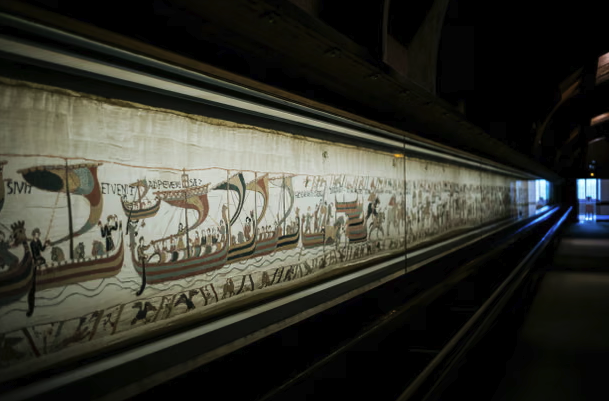

This massive medieval comic survived the French Revolution, Nazi occupation in World War II, and today, people are queuing down the street to be able to experience.
Well, it's the fact that it is one of the most powerful visual storyboards ever created.
It took two years to make, and has 58 scenes, with 600 human figures, and 200 horses, and at its heart, the Bayeux Tapestry is like a box set from the 11 century. Imagine if Game of Thrones and Succession had a baby, and you'd be close...
It tells the epic story of the Norman Conquest of England in 1066, tracking the bitter rivalry between two top dogs, over who had the right to wear the English crown: Harold Godwinson (the last Anglo-Saxon King of England) and William, Duke of Normandy (who became William the Conqueror).
The narrative reads exactly like an episodic graphic novel, structured into three distinct acts.
Whoever commissioned that piece of extraordinary embroidery a thousand years ago understood something fundamental about human nature.
The best way to preserve a story, is to tell a story.
See, since the dawn of civilisation, humans haven't have used stories to teach, to communicate, to educate, to persuade and to pass ideas from one generation to the next.
Jesus taught through parables. Aesop used fables. The Brothers Grimm gave us Hansel and Gretel and Snow White. Robin Hood, Sherlock Holmes, Superman, Spider-Man... the characters change, the medium changes, but the principle never does.
Humans are wired for stories.
More than that, we absolutely bloody LOVE stories
We are addicted to them. We binge them on Netflix, listen to them on podcasts, read them before bed, in the bath on the plane, we tell them over a pint and share them around the dinner table.
Our life is stories.
And if you're a pet business owner who isn't telling stories, and your marketing is nothing but offers, announcements and "spaces available" posts, then you're fighting against thousands of years of human psychology, and you're making your marketing far harder than it needs to be.
They think their marketing needs to list facts and features.
They write website copy that says: "We have a 5-acre yard, 20 years of experience, and a modern booking app and we hold certificates from a bunch of organisations you've never heard of..."
Sorry dude, nobody cares about any of that shit.
That's like trying to sell a Michelin starred meal by handing someone a list of ingredients...
Your prospects don't just want to know what you sell; they want to know why you do it, how you got here, and what your journey looked like.
Let me give you a real-world example of how this plays out in high-ticket environments.
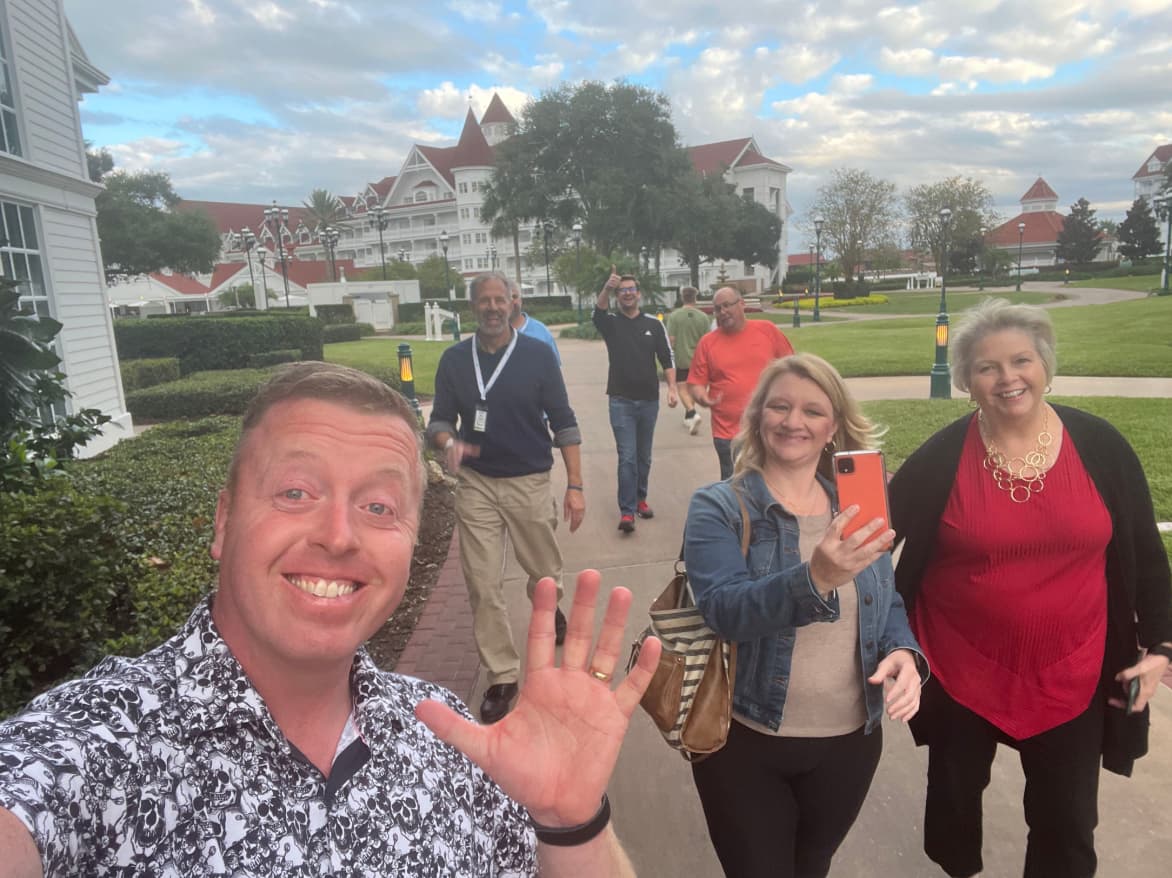
The menu – which was a list of fancy ingredients – was brought to life when the chef came out in between courses and added story and provenance to the experience.
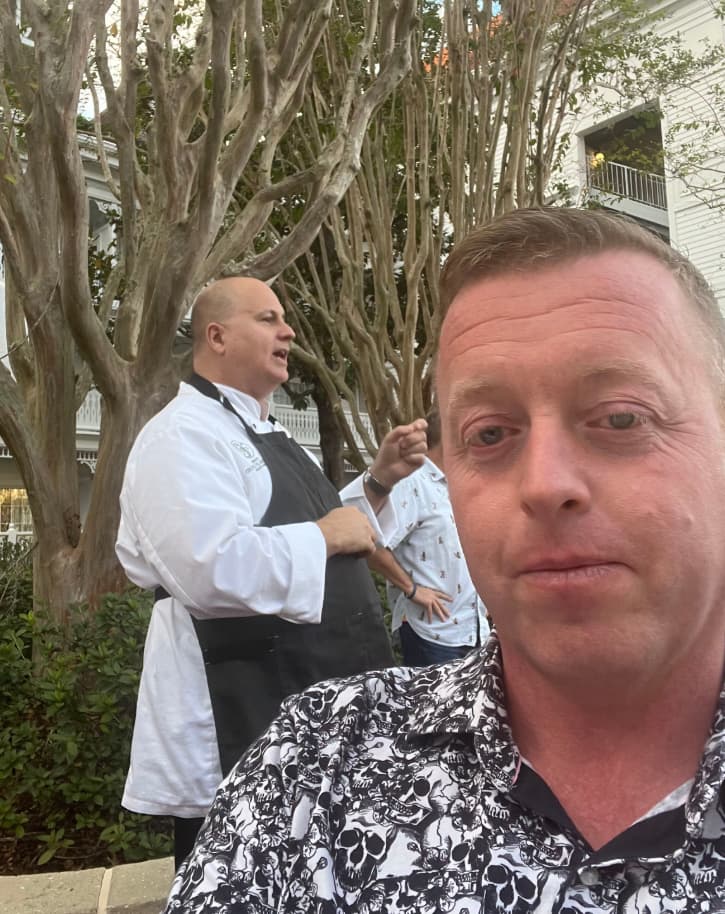
"Your waiters are now pouring the Chateau Escalance. This is a rose from the Provence region, the nice southern part of France, beautiful sunny out there. You get that Mediterranean breeze rolling in. You're going to get some nice aromas of some red berries in there. Got a really nice dry finish, but not very smooth at the end though, so it'll pair up very nicely with this"
Would I have enjoyed the wine without the explanation?
Absolutely.
But that two-minute story elevated the whole experience (and somehow, that made the wine taste even better!)
That's exactly what your marketing should be doing.
And right now, this matters more than it ever has in human history.
See, right now we are currently living through the AI Slop-ocalypse. Every single day, the internet gets flooded with millions of generic, soul-less paragraphs written by Claude, ChatGPT, and Gemini. Everyone is using the exact same robotic tool to say the exact same cookie cutter, boring stuff.
It might read correctly, with a neat structure and perfect punctuation, but it has no pulse, personality or passion.
The internet is drowning in large language model copywriter crap.
Do you want to know the only way to stand out from that ocean of digital garbage?
By telling your authentic, unfiltered, warts-and-all story.
Yes, AI can mimic your style (kinda). It can write killer headlines. It can optimize your SEO.
But AI cannot live your life and share how you felt, and how those experiences shaped why you do things the way you do in your business.
- It doesn't have twenty years of human memories.
- It wasn't there when a client hugged you because you'd changed their dog's life.
- It didn't feel the pit in your stomach when you almost went bankrupt.
- It didn't cry when you got the keys to your facility.
Those moments belong exclusively (and only) to you.
And because they belong to you, they are completely impossible to commoditize.
The problem is, too many business owners keep their best stories locked away in their own heads, or save them for chats over coffee with the team.
You have dozens (or hundreds) of stories to tell.
You have your origin story. Your worst client story. Your biggest mistake. The puppy that changed a family's life. The shy and anxious French bulldog who came out of their shell and started wagging their stubby tail for the first time when they first went into your scent space.
Every single one of those experiences is a unique asset, which you can use as a lasso or a lure that hooks people in.
Your story is what attracts the right people to your business.
It's what differentiates you in a market full of automated noise. It's what gives your business a personality, and it is the only thing people will actually remember long after they've forgotten your prices.
The Bayeux Tapestry was originally commissioned as pure Norman propaganda. Someone wanted to make absolutely sure that their version of events was the one history remembered.
History is littered with battles that changed nations.
Yet very few have a 70-metre illustrated story that still captivates people almost a thousand years later.
By telling the story they turned a turning point in history into a 1,000-year asset.
Lots of businesses do remarkable things.
Yet, very few bother to tell the story.
Which is why people remember the ones that do.
Think about it this way: If the Battle of Hastings happened today, Bishop Odo wouldn't have stopped at an embroidery. There would be a Bayeux Tapestry Podcast, live-tweets from the field, a YouTube documentary series, a Substack breaking down the strategy, and short-form TikToks of peoples limbs being severed.
Every medium available would be used to hammer home the same core story, repackaged, repurposed and retold in a hundred different ways.
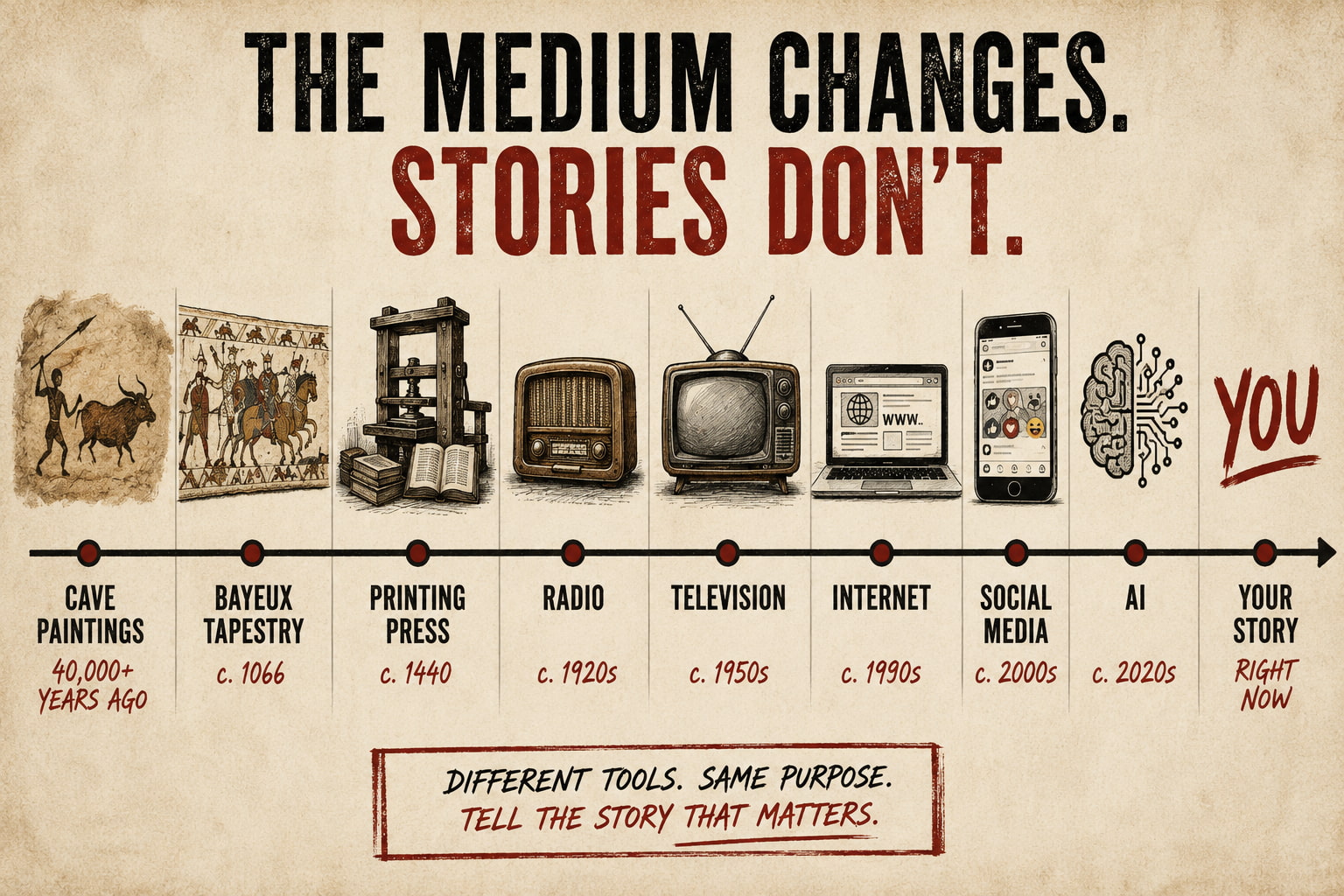
Are you actively telling your story across different media, in different formats, over and over again? Or are you leaving the market to guess who you are?
Remember, we might look after dogs, but we're in the people business.
And people buy people.
They don't build relationships with logos, fancy websites and perfectly polished ai generated posts.
They build relationships with people.
And people connect through stories.
So, start telling yours...
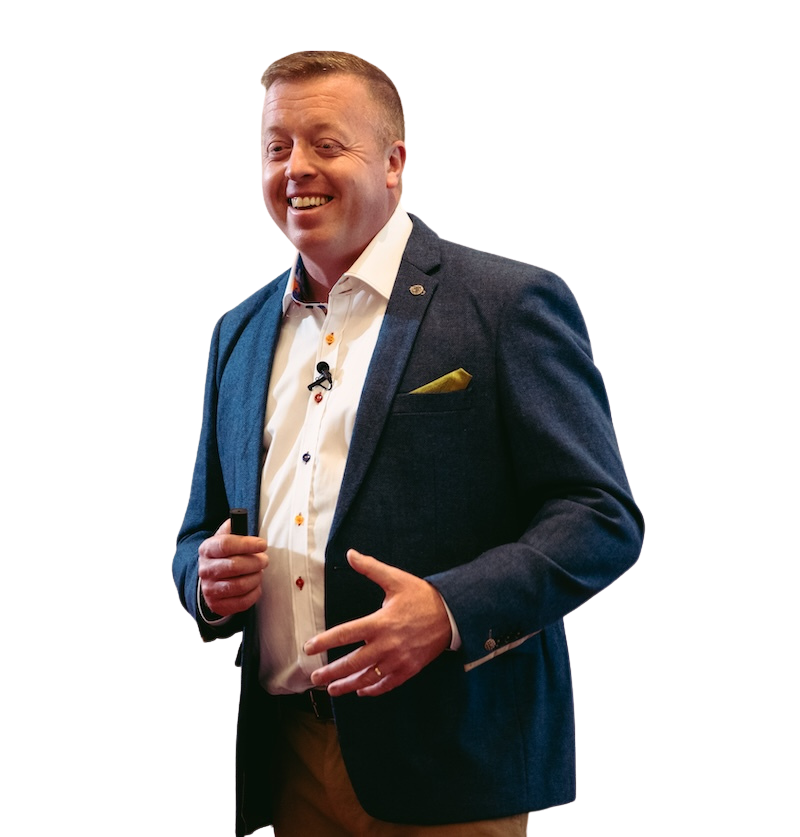
Author of 9 books, Dom is a much in demand speaker at pet business events all over the world. His mission is to help struggling pet business owners to unleash their potential, so they can create a super profitable, impactful, and industry enhancing business.
